Monday, March 20, 2017

The Namesake by Jhumpa Lahiri

Jhumpa Lahiri's 'The Namesake' is the story of a young American Indian , Gogol.Gogol hates the name given to him by his parents , his 'good name' as they call it. He particularly hates the comparison to his namesake , Nikolai Gogol and is embarrassed by it . Gogol grows to be a handsome young architect , falls in love with an American girl and is happy for a while living with her and her family.Later,Gogol meets an Indian girl and marries her but feels lonely in the relationship. 
Gogol is not proud of his origins , in fact he has been shown to hate them .He is shown growing more sensitive to his family , particularly his mother as time passes . His reactions to his father's death are especially touching . Jhuma Lahiri has managed to portray beautifully how Gogol's mother Ashima adjusts to her life in a foreign country , how she evolves from being a homesick housewife to a confident woman comfortable in her surroundings.. 

Kim : by Rudyard Kipling

Rudyard Kipling was one of the most popular writers of his era, and his novel Kim, first published in 1901, has become one of his most well-known non-juvenile works.
The novel takes place at a time contemporary to the book's publication; its setting is India under the British Empire. The title character is a boy of Irish descent who is orphaned and grows up independently in the streets of India, taken care of by a "half-caste" woman, a keeper of an opium den. Kim, an energetic and playful character, although full-blooded Irish, grows up as a "native" and acquires the ability to seamlessly blend into the many ethnic and religious groups of the Indian subcontinent. When he meets a wandering Tibetan lama who is in search of a sacred river, Kim becomes his follower and proceeds on a journey covering the whole of India. Kipling's account of Kim's travels throughout the subcontinent gave him opportunity to describe the many peoples and cultures that made up India, and a significant portion of the novel is devoted to such descriptions, which have been both lauded as magical and visionary and derided as stereotypical and imperialistic.
Kim eventually comes upon the army regiment that his father had belonged to and makes the acquaintance of the colonel. Colonel Creighton recognizes Kim's great talent for blending into the many diverse cultures of India and trains him to become a spy and a mapmaker for the British army. The adventures that Kim undergoes as a spy, his endearing relationship with the lama, and the skill and craftsmanship of Kipling's writing have all caused this adventurous and descriptive—if controversial—novel to persist as a minor classic of historical English literature.

Heathan : By Jack London

Jack London , the writer of this short story is an American author , juronalist and social activity. He has contributed many well known works to society
The narrative pattern of this story is very complicated .The narrator named Charley has directly dedicated this story to his  friend Otto who is negro man . The story presents voyages of these two characters .They have been living together for seventeen years. Their relationship is based on their emotion rather then master or slave.
The very meaning of heathen is the person who does not belong to any fix or particular class or community.the story reveals that Otto is considered to be the heathen as he does not belong to upperclassmen though he is from the African American class. The African people are suppressed by the whites and they are dragged to their own class but they are considered to be slave. This story also demonstrate the idea of master slave relationship.the white belives that the black are born to be merely slaves and that is why they are forced to be African Christian in which otooo remains d ifferent from them and thus he becomes the heathen of that community.
Jack has indirectly given his views over how society creates injustice to the people. If Otto does not belong to his Christian community then society also does not belong to the religion names Humanity and it does not let human beings live their life the way they want to.

Moby Dick : By Herman Melville

Herman Melvills early adventure novels—Typee (1846), Omoo (1847),Redburn (1849), and White Jacket(1850)—brought Herman Melville a notable amount of popularity and financial success during his lifetime, it was not until the 1920’s and 1930’s, nearly fifty years after his death, that he received universal critical recognition as one of the greatest nineteenth century American authors. Melville took part in the first great period of American literature—the period that included Edgar Allan Poe, Ralph Waldo Emerson, Nathaniel Hawthorne, Walt Whitman, and Henry David Thoreau. For complexity, originality, psychological penetration, breadth, and symbolic richness, Melville achieved his greatest artistic expression with the book he wrote when he was thirty years old, Moby Dick.
Between the time of his birth in New York City and his return there to research and write his masterpiece, Melville had circled the globe of experience—working as a bank messenger, salesman, farmhand, schoolteacher (like his narrator, Ishmael), engineer and surveyor, bowling alley attendant, cabin boy, and whaleman in the Pacific on the Acushnet. His involvement in the mutinous Pacific voyage, combined with accounts of a notorious whale called Mocha Dick that wrought havoc in the 1840’s and 1850’s, certainly influenced the creation of Moby Dick.
The tangled themes of this mighty novel express the artistic genius of a mind that, according to Hawthorne, “could neither believe nor be comfortable in unbelief.” Many of those themes are characteristic of American Romanticism: the “isolated self” and the pain of self-discovery, the insufficiency of conventional practical knowledge in the face of the “power of blackness,” the demoniac center to the world, the confrontation of evil and innocence, the fundamental imperfection of humans, Faustian heroism, the search for the ultimate truth, the inadequacy of human perception.Moby Dick is, moreover, a unique literary form, combining elements of the psychological and picaresque novel, sea story and allegory, the epic of “literal and metaphorical quest,” the satire of social and religious events, the emotional intensity of the lyric genre (in diction and in metaphor), Cervantian romance, Dantesque mysticism, Rabelaisian humor, Shakespearean drama (both tragedy and comedy), journalistic travel book, and scientific treatise on cetology. Melville was inspired by Hawthorne’s example to give his story the unifying quality of a moral parable, although his own particular genius refused to allow that parable an unequivocal, single rendering.
In style and theme, Melville also was influenced by Edmund Spenser, William Shakespeare, Dante, Miguel de Cervantes, Robert Burton, Sir Thomas Carlyle, Thomas Browne, and vastly miscellaneous reading in the New York Public Library (as witnessed by the two “Etymologies” and the marvelous “Extracts” that precede the text itself, items from the writer’s notes and files that he could not bear to discard). It was because they did not know how to respond to its complexities of form and style that the book was “broiled in hell fire” by contemporary readers and critics. Even today, the rich mixture of its verbal texture—an almost euphuistic flamboyance balanced by dry, analytical expository prose—requires a correspondingly unique sensitivity on the part of the reader. The most remarkable thing about the plot is that Moby Dick does not appear physically until after five hundred pages and is not even mentioned by name until nearly two hundred pages into the novel.
Whether it be the knowledge of reality, an embodiment of the primitive forces of nature, the deep subconscious energies of humanity, fate or destiny inevitably victorious over illusory free will, or simply the unknown in experience, it is what Moby Dick stands for that occupies the narrator’s emphasis and the reader’s attention through the greater part of the novel. In many ways, the great white whale may be compared to Spenser’s “blatant beast” who, in The Faerie Queene(1590-1596), also represents the indeterminable elusive quarry and also escapes at the end to continue haunting the world.
Moby Dick is often considered to be the American epic. The novel is replete with the elements characteristic of that genre: the piling up of classical, biblical, historical allusions to provide innumerable parallels and tangents that have the effect of universalizing the scope of action; the narrator’s strong sense of the fatefulness of the events he recounts and his corresponding awareness of his own singular importance as the narrator of momentous—otherwise unrecorded—events; Queequeg as Ishmael’s “heroic companion,” the folk flavor provided by countless proverbial statements; the leisurely pace of the narrative with its frequent digressions and parentheses; the epic confrontation of life and death on a suitably grand stage (the sea) with its consequences for the human city (the Pequod); the employment of microcosms to explicate the whole (for example, the painting in the Spouter Inn, the Nantucket pulpit, the crow’s nest); epithetical characterization; a cyclic notion of time and events; an epic race of heroes (the Nantucket whalers with their biblical and exotic names); the mystical power of objects (Ahab’s chair, the gold coin, or the Pequoditself); the alienated, sulking hero (Ahab); and the use of lists to enhance the impression of an all-inclusive compass. Finally, Moby Dick shares the usually didactic purpose of a folk epic; on one level, its purpose is to teach the reader about whales; on another level, it is to inspire the reader to become an epic hero.
All this richness of purpose and presentation is somehow made enticing by Melville’s masterly invention of his narrator. Ishmael immediately establishes a comfortable rapport with the reader in the unforgettable opening lines of the novel. He is both the objective observer and a participant in the events observed and recounted, both spectator and narrator. Yet he is much more than the conventional wanderer/witness. As a schoolmaster and sometime voyager, he combines his intellectual knowledge with firsthand experience to make him an informed observer and a convincing, moving reporter. Simply by surviving, he transcends the Byronic heroism of Ahab, as the wholesome overcoming the sinister.

How much land does a man need : by Leo Tolstoy


How much land does a Man actually require?
Human nature pushes us to want more and more. In the story, “How much Land does a Man require?” Pakhom, the protagonist, portrays the nature of Greed in Humans. A simple peasant living in the Countryside in his Lust for Power, status in Society, wealth seeks to own more and more Land and eventually finds himself losing everything including his Life. 
The usage of “Land” in the Story makes a direct Metaphor for the Greed of more wealth and Stature. Even today, the issue of Land is very Important just as it was during the early Capitalism Epoch where the Story takes place.
Pakhom went through many transactions for various Lands at different Prices; As Socrates said, “He who is not contented with what he has, would not be contented with what he would like to have.” This is applies well to Pakhom. We are never content with our Lives, no matter how off we may be and while trying to out stand the standard of Living, and we put ourselves in the eyes of danger, ending up with nothing! 
Pakhom brags that even the Devil cannot stop him if he has Land, thus the devil secretly challenges him. Pakhom’s path for an apparent “Glory” begins with The Barina, 15 Dessiatins does the Job well, but he was harassed by the neighboring Peasants and moved to the Lands beyond the Volga and he was allotted 50 Dessiatins. Pakhom lived happily for 5 years before he grew frustrated and began to cast for an estate outright. He closed a deal with a Peasant who was willing to sell 500 Dessiatins for 1000 Rubles When Pakhom hears about the Land of The Bashkirs, he is delighted and wishes to own some of their Land, when he is further told that the Price is only 1000 Rubles for the Area of Land that he can in a Day, he is Overwhelmed and Excited, he sees a Future of Possibilities and hopes to cover at least 5o Versts.
Pakhom completes the challenge and gains much Land indeed but it is Short Lived as the Strain has drained the Life out of him.

The postmaster: by Rabindranath tagore

Rabindranath Tagore is 20th century a versatile and prolific writer .his work is originally written in Bengali and later on translated into other languages.here the postmaster a full of pathos and heart wrenching . Story moves the readers to tears. So many emotions have conveyed by Tagore in such a subtle meaner and story revolves mainly around four themes
1) longing
2) separation
3) companionship
4)dependency
The postmaster is moving story of the love of a simple , rustic girl for a city bred man.the man from culcatta is posted as a postmaster in a remote village. In his attempts to escape from a terrifying loneliness .He shows love and affection on his maid servant ratan.he listens to the story of her childhood,about her parents and family members. Ratan in all her simplicity, grows immensely attached to Dada the postmaster,a person can not hold the that place for a long time and he decides to resign and go back to Calcutta . At the end of story the decision leaves the  orphan girl dump founded.here Tagore depicts the futility of this girl's love and pathetic situation,she finds herself in with great intensity.
While the story takes place within a colonial context.its main function is not as an for colonialism. The interaction of the characters dadababu and ratan exhibits the misunderstanding that often arroused between native indians results of different views on the different tradition and we find the different emotion which Dadababu and ratan have for each other that present the central point of the story.

All My Sons : by Arthur Miller

The Keller House is one with white picket fencing, an immaculately kept house, with smiles, laughter and kisses. With a broken tree at the forefront of the garden, it gives a glimpse into what is happening under the surface of this family. Arthur Miller’s All My Sons is a critically acclaimed tale of love, families and lies searching for normality and calm after the war.
The Don of the family, Joe Keller is a seemingly laid back, jovial sort with an affliction of his son Larry who is missing at war, his son Chris and an unsettled wife. Reeling in the aftermath of loosing their son and the deployment of faulty engine parts for warplanes, the family soon begin to unravel under the immense pressure. The Keller’s are seemingly centre focus of the neighbourhood, with kids and friends popping on by. Larry’s sweetheart, the girl next door, Lydia comes to stay under Chris’s invitation and the Keller’s world start to unravel.
The set design by Michael Taylor of the Keller’s house was vast and all encompassing on the stage at The Rose. A full scale family house was impeccably constructed with every timber in line and every swing of the front door. Remnants of a storm left scattered leaves on the lawn, with Larry’s tree knocked to the ground. The costume team led by Tracy Stiles perfectly captured 1940’s America, the demure and liberating dresses and trousers for women represented an America free from the constraints of war.
The actors were fluid and engaging, slowly revealing the death of their characters and the pain that they held from the war. The dynamic relationship between Lydia (Grace Carter) and Chris (Alex Waldmann) was refreshing and troubled, which was conveyed convincingly and solidly. Penny Downie as Kate Keller was heart wrenching and intense as we watched her troubled mind cling on for survival. The dark and curious Joe Keller, played by David Horovitch ignited some reminiscence of the Godfather. Overall the cast were tight, fluid and comfortable with the production. The staging at times was questionable as several times the audience are faced with the actors’ backs at high intensity moments, such as when Kate is questioning Lydia’s life in New York. I think that the audience would benefit more in being able to see Lyida’s face to truly begin to understand and invest in her character from the beginning as that is a vital moment in the story.
Overall as a production All My Sons was a stellar production, raising moral questions and wonders into what risks people are willing to take for themselves and their families.

The boy comes Home : by A.A.Milne

The opposition between two things is called conflict. In "The Boy Comes Home" by A.A. Milne, the element of conflict is very prominent. Almost all the five characters are in conflict but the agon between Philip and Uncle James is the soul of the play. The majot factors which establish conflict between the two are: punctuality, manners and Philip's career.
     The first conflict starts at breakfast on the issue of punctuality. Philip has just repatriated from a nerve-shattering war. So he is in a mood of holiday. He wakes up late in the morning. He demands his breakfast at 10 o'clock. Uncle James does not approve his unpunctuality. He has made a strict rule in his house to have breakfast at 8 o'clock sharp.
     The second conflict takes place in a dream on the matter of decorums. While waiting for Philip in the morning room, Uncle James naps in front of the fire. He dreams that Philip has a cigar in his hand. He lights it and starts puffing in front of his uncle without any permission. Uncle James does not like it at all.
    The third conflict is seen in the dream on the concern of Philip's employment. Philip wants to be an architect while his uncle tries to push him into his jam business. A showdown starts between the two. James exploits the power of money and Philip uses the power of revolver. Philip wins. However, when James wakes up, Philip is ready to join the jam business.

Far from the mading crowd: Thomas Hardy


Far From The Madding Crowd centers around the beautiful Bathsheba Everdene, and the three who love her and try to win her over. Gabriel Oak, Mr. Boldwood, and Sergeant Francis Troy find them selves intertwined in their quest to win Bathsheba. Bathsheba is headstrong, feminine, and beautiful. She inherits her uncle’s farm, and tries to run it herself. As all of theme were farmers, they didn’t think that she cold do it. Although she had a few things go wrong like fires she overall handles her farm very well and became a good farmer. But, her love life was something else. She had three men after her at the same time. The first suitor she met was Gabriel Oak.
Farmer Oak was dependable and caring and wise. Without him, Bathsheba couldn’t have taken care of the farm. Oak did have his own sheep, but they were killed in a freak accident when they ran off a cliff. Oak is “one with nature." He knew just by looking at his she’s tails that it was going to rain. He would do anything for Bathsheba (and he did), even thought she denied his first attempt at marriage.
In the end thought, Bathsheba did marry Oak. Troy first met Bathsheba as they were walking through the woods. Bathsheba became tangled in the brambles with Troy. He made a few comments to her about how lovely se was and how he would love to stay tangled up with her. Instantly, Bathsheba was in love. Little did she know that Troy was deeply in love with a girl named Fanny Robbins, who was a maid of Bathsheba’s. Troy ended up marrying Bathsheba, but it was a bad marriage and didn’t last for long. Bathsheba was in love with Troy’s image and he loved her for her money and appearance. The final straw for their marriage was when Fanny died. Troy lost his true love, an unborn child, and in the end, his own life. Ironically, his death was by the hands of Bathsheba’s suitor Boldwood.
Boldwood was introduced to Bathsheba when she sent him a valentine. Soon, his pleasure turned to obsession for Bathsheba. She constantly denied his advances, but he wouldn’t give up. Boldwood eventually found himself on the brink of insanity.
When Troy returned, after allowing everyone to believe that he had drowned, Boldwood became enraged when he tried to take Bathsheba away. After all, it was his Christmas party and Bathsheba promised him an answer on his hundredth marriage proposal. Seeing Troy pulling on Bathsheba’s arm caused Boldwood to shoot Troy.
He turned himself into the authorities where a pardon allowed him to live the rest of his life in prison. In the end, Bathsheba happily married to Oak, although I think that it was more of friendship than love. Troy was united with his love in death and Boldwood went from a successful farmer to an old murderer.

Othello: by Shakespeare

In the shakesprean tragic drama we see hero of the play of great structure having a great social status.at the same time in the place we see the position of such hero's and it's speak but for the readers interest hero's of shakesprean tragic drama always have some serious tragic flaws in them and ultimately this tragic flaw becomes the cause of the fall of hero.
Therefore we can say that Othello is tragic play because it has all characteristics which tragic play has to have in it.othello posses great amount of strength and a great quality that has to be in hero of Shakesprean plays .in the play we see that Othello is loved by allmost everyone around him including brabantio the father of Desdemona,Cassiopeia and allmost all the senators.once Duke said
"Othello is more fair than black"
Though he was loved by everyone there was a man who had hidden hate for him and that man was the villain of the play Othello Iago himself.we can also said that he trusted Iago so blindly that he can easily be taken to be unaware of the ways of the world.iago used this nature of Othello against him only.iago knew that Desdemona is only person whom Othello loves the most and Iago  planned against him and ruined him and his love cold blooded.
When we see Othello stabbing  Desdemona we feel pity according to the characteristics of tragic play.there are two things  which added more into the jealousy of Othello.  the first is Desdemona's advocacy of cassio and second thing Desdemona's false story about the lost handkerchief which increased the temperament of Othello's anger .
The other quality of the tragic play is it should arroused catharsis in the mind of the readers.  there are many incidents when we feel  pity and fear.desdemonas lie about handkerchief.she speak lie because she didn't want to make Othello disappointed. There is also onther incident when we feel pity and fear when Othello was killing Desdemona cold heartedly. We feel fear and our pity is with Desdemona because inspite of doing nothing wrong Desdemona had to meet her tragic death
When Othello was killing Desdemona we feel pity for Othello because he didn't know what was  the he doing that only by knowing the tales of Iago and was unaware of Desdemona's chestity and her loyalty.and we also know that when Othello will come to know the reality of Desdemona's loyalty he surely will recreate .
Thus the play Othello has all the characteristics that has to be there in the tragic play .

Heart of the Darkness: by joseph concrad

Throughout Conrad's career Heart of Darkness remained one of his most popular and highly regarded works. The novella details the story of the seaman Marlow who, fresh from Europe, is sent on a boat journey up the Congo River to relieve Kurtz, the most successful trader in ivory working for the Belgian government. Prior to their personal encounter, Marlow knows and admires Kurtz through his reputation and his writings regarding the civilizing of the African continent and sets out on the journey excited at the prospect of meeting him.
However, Marlow's experience in Africa inspires revulsion at the dehumanizing effects of colonialism, a disgust that culminates when he discovers that Kurtz has degenerated from an enlightened civilizer into a vicious, power-hungry subjugator of the African natives Marlow's journey forces him to confront not only Kurtz's corruption but also those elements within himself that are subject to the same temptations that affected Kurtz. When Marlow finally meets Kurtz, the mythical figure is near death, ravaged by disease and dissipation. After Kurtz's death, Marlow returns to Belgium and is visited by Kurtz's fiancée.
During the visit he lies to her about Kurtz's activities and falsely claims that he called her name before he died. Critics have debated the motives behind this last deception: some feminist critics view the lie as an act of condescension; otherl commentators contend that Marlow wants to preserve his own illusions about Kurtz; and yet others perceive the lie as a compassionate act that functions to contrast Marlow's humanity with curtz inhumanity.

Tughlq : by Girish karnad

Indian history divided in three period 1) assistant 2) midieval 3) modern
In tughlaq karnad goes back to the second phase of Indian history because tughlaq reign also comes under this phase. In his portrayal of tughlaq,karnad has depicted the last five years of his rule. He came to know about tughlaq when he was going through the tarikh- firoz shahi of tughlaq sourd historian ziayudiin barani.
Karnad said that he was fascinated by the character of tughlaq .He said that  tughlaq was brilliant individual yet he was regarded as one of the failures ever.he tried to introduce policy that seem far sighted but which earned him the name mahumadd - the mad.he ended his career bloodshed and chaos .
The history of tughlaq is primarily the product of midieval Muslim era. Midieval Muslim historian zia-ud-din barani defines history as a form of knowledge for understanding the silent asscpted of Islam and aims to educate Muslims-sultans in their duty to their faith.
In this frame work, tughlaq became a repulsive subject because of his disregard for Kiran in dealing with both hindus and Muslims alike and is attempts to limit Islam's influences in the political and judicial spheres of India.
Brani has criticized tughlaq for not following the principal of Islam properly,he has discribed him as a ruthless and ambitious king.this gets reflected through to well known Indian modern historians . Hbim and nazmi who said brani makes observation to the effect that tughlaq had lost implicite faith in the tradition of prophet.
The play opens in 1327Ad the time when tughlaq was rulling over India. The image of monarchial rule in India is created as the location of the first seem in the yard in front off the chief  court of justice in Delhi and Indians religious plurality is reflected in a crowd of citizens with few hindus and Muslims . In the very first seen we see tughlaq inviting his subjects to celebrate a new system,were justice works without any consideration of might or weakness, religion or creed. It is political play.

The Hairy Ape: by Eugene O'Neil


Eugene O'Neill was born in new York city in 1888.he has been compared to virtually every figure in the Western world and is considered the first great American playwright.his plays deal specifically with an American tragedy,rooted in American history and social movements.
In the  very beginning of the play the description of forecastle is given.fire man gethered in the forecastle of ship in the break of shovelling coal. They are enjoying, drinking beer by singing,cheering and jocking.protagonist is yank..Long give speech on capitalist society considered the ship is home.
In secene Mildred and her aunt promenade deck.both are aristocratic characters.he wants to help poor .when she go to stock home.where she fainted see yank as"take me away oh! Filthy beast"
Here we show upeer difference between upper class people and laser class people
In forth scene we show that yank covered with dust. seating like Rodin's the thinker. In fifth scene yank and long walked down avenue a neat and clean Street..He had a fight with a gentle man. Yank punches him.police arrested meanwhile nobody is noticing.long attempts to demonstrate .Yank individual is a part of general . Yank being .Yank wanted to raise himself at the height of bourgeois class but long explains the class discrimination to him.from scene 4 yank begins to think by visiting fifth Avenue defferenciates  fireman's shameness and upper class people likeliness including Mildred.
Scene six opens in a prison of blackwellis Ireland .Yank in a same position of Rodin's the thinker .Blood stained bendeges are wrapped around his head . in scene 8 during twilight of the day yank makes his way to monkey house of nearly zoo.   Yank realizing unbearable truth of his identity mirror in this beast behind steal bars,yank announced that he has given up the sceam of revenge .uolocks the door and broght murderous hug.
Yank struggle between being and animal. It seem to be firmly political play . Subtitle suggest the two extream negative view of state of mechanised America where two classes exits the hairy apes and the capitalists
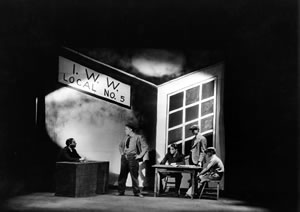
Yank pride is shattered after Mildred's a counter .The indication of the Ape that is filthy beast,brainless ape,back to ape leads him to human regression . This statement about him slowly leads him to the state of ape and he accepts his identity as an ape. His ape like conduct in fifth avenue jail,and IWW  leads him to the actual gorillas cage . Where he releases gorilla  from the cage and than dies in it.the gorilla coming out of the cage and into the outside world may indicate
that Yanks animal self that is man's primitive figure and strength still exists in the world.

The Bluest Eye: by Tonny Morrison

Tonny Morrison is African American writer.It is first novel of tonny Morrison in 1970 . Figuratively  speaking the bluest eyes is a mental  standard motion of beauty that are discuss through out the nature.
Pecola beloved that her family trouble are the result of their Uglyness.the characters are  metaphors for the family's place in the socio economy hierarchy. The novel portrays this complex web  and the bluest eye is the symbol of rich.
Pecola is fragile and delicate child when novel begins.she nelives herself ugly and unworthy of love and respect.she  believs the she is inferior compare to the white population.pecola has biggest abendonment by society,her teachers and schoolmates and her own parents abendent pecola in a stressful situation at home by her parents.blue eyes suggests American white beauty.pecola raped by two white men and also by her father. Each night she prayed for bluest eye.it is ironical how in the end she looses her eyes in a way that she has driven herself into a state of madness.
"To having something as wonderful as that happened would take a long long time" suggesting the destortion of her dream .
Claudia and Frieda find out that pecola has been impregnated by her father,and unlike the rest of the neighborhood,they want the baby to live.they sacrifice the money they have been saving for bicycle and plant marigold seeds. Pecola's baby dies when it is born prematurely.cholly, his s father who rapes pecola a second time runs away,dies in work house. Pecola goes mad, believing that her cherished wish has been fulfilled and that she has  bluest eye .

The Gift Outright

The present poem of Roberts frost can be considered as a poem of colonial conflict anin America between the native Americans and the settlers who from different countries of Europe settled in America.the poet as a decendent
Of those settlers writes this poem about conflict between settlers as colonizers and native people as colonized . The poem opens with the poet's expression of love of his country.the poet says that the land of there's before they belonged to that land more than one hundred where already passed and in every state of America . The settlers considered that land as their own motherland but it was unfortunate that's still they were not possed who accepted by native American.finally they found that the reason was, they lived life in a different way  of life. So that they may get accepted by native place of course before they were accepted,they had to fight many nettles and finally they were accepted.that surrender was unconditional whether that country progresses or not but they were live in that country as the the people of that country as the true citizen of that country. This is the gift that country gets from the settler and those settlers get this country as a gift.

Daffodils : by Wordsworth

Wordsworth being a Romantic poet and an admirer of nature. He talks about daffodils in this poem  an threw it he wishes to makes us aware about what nature can do in so far as mental peace is consult.
In the first stanza poet companies himself with a cloud which wanderes  around aimlessly while he is moving through lane. He comes across host of golden  daffodils which are fluttering and dancing in the breeze . He is pleast with sight of daffodils .
In the second stanza poet companies daffodils with with​ the stars that shine across on the milky way. They seem to looking as a bright stars across the walley. He further talks about it's never ending lines of beautiful daffodils . Where in he saw the thousands of them at aglance and they were looking as if they were dancing with Joy.
Moving forward to the third stanza poet starts comparing the daffodils with the waves but he says that the daffodils were looking more beautiful as compared to the waves. Looking at it poet become extremely happy and started thinking that the wealth that this sitht invaluable.
The last stanza sums up the entire poem. We're in the poet comes back to his place and makes him self comfortable on a caught in a mood which is extremely thoughtful. He starting thinking of the daffodils and become extremely happy .He feels that daffodils blessful even a thought of it makes the poet extremely positive and his heart is filled with pleasure.
In this poem poet wants to tell us  that we in our busy life seen to forget what nature is all about. One should be happy by being a contact with nature and one should find time for the same but the problem with humans is that we don't appreciate nature and are always running after materialistic pleasure of Life.

Fire and eyes by Robert Frost

This shiort poem of Robert Frost interpretes his own thinking about how probably the earth would be destroyed. The Indian oriental myth and western myth both suggests that there would be the end of this earth. Indian oriental myth suggest that earth would be destroyed because of water and the Western Christian myth suggests that earth would be destroyed because of fire.the present poem shows the poet's thinking about it.
Some people are of the opinion that the earth would be destroyed because of fire while some others think that the earth would be destroyed because of ice water. The poet has made a study about desires of the people on the basis of that study the poet comes to a conclusion that the earth would be destroyed because of the fire of never ending desires but if the same earth is to be destroyed twice,the second time it would be destroyed because of ice.
The poet here refers to cold blooded hatred which allows a person to be very cool on a surface but full of hatred and venom (Poison) from inside . So for  the second time if earth is destroyed because of cold blooded temperament with which remains covered modern Man's hatred so both fire and ice equally capable of destroying earth.

Stopping by wood on a snowy evening:by Robert Frost

                                                                                
The Poem opens with the diacritic of woods. The woods are lovely tone having enough attraction in it  to compare any individual to stop their exists for a while. The poet knows whose wood they are and the owner lives in the village. He won't mind if the poet stops their for sometime to enjoy the beautiful of the place but when he makes pause there his horse considers it strange,uneven and improper because their is no farmhouse or a stable there.the horse realize that it is an uneven pause because that is the darkest evening of the year and the lake is also frozen. The same horse gives a shake to it's harness bell to remind the poet that their pause there is uneven. The only other sound accept of that bell is the whistling sound because of the blowing if the wind.
The poet is reminding that the woods  have got enough beauty. They are lovely,dark  and deep but the poet has got many promises to keep before he sleeps there,he miles to go on and on 
The applied meaning of the poem is more appealing and convincing the poet knows whose woods they are but that person  is not an individual that owner is god almighty.who watches everything. The presence of horse also demands an interpretation.it is not on the poem only animal but that inner craving of an individual which does not allow that person to be in the company of the nature. The horse reminding to the poet is a sign  of how man occupied with material life.which does not allow man to be with nature. The last stanza of the pie. In which the poet describes the woods , lovely , dark and deep has a note of despair in it. The word "dark " suggests poets despair because he couldn't get the expected price of his agricultural products. The sleep is not a common sleep. In last two lines of the poem it stands for death and here poem becomes a poem in karma yoga.

Man may come across beautiful sights,places and individuals but man must not meet their final step. Man should go on and on doing his duties and karma. The day man stops performing his duty and karma it is the day of his death though that person may live biologically. The lesson of the poem is importance of karma in life and duty is more important than beauty.

compensation: by R.W.Emerson

The poem which is written by Emerson is full of philosophy and transcendentalism main idea of poem
Balance in imbalance.
The speaker ask the question like do I have a right to be happy when other are not? It is also a fact that everyone is not happy at the sametime.this is in a mood of meditation in which the speaker tries to meditate himself in the sea of full of question regarding equality.emerson seems to be a preacher here who shared or preaches the Buddhist philosophy that every human being is unique and no one is superior or inferior .This uniqueness makes all human beings equal otherwise there is no equality among people because everyone is different in their own fileds.
The writer has used figurative language .In this poem  in which he depicted two things on one side there is an individual and on other side society itself. The very direct question makes the whole poem clear that whmar do you mean when you say you are not equal to somebody.he used the  word alone in the line
"I still and mourn alone"
And in the second stanza he says
" And why they mirch unseals all toungue.
When you wish to beequal ti to someone means you are hating your own position.what becomes more important because here is satisfaction what matters here is one's work  and how the way one works.
Emerson s poem does not have poetic qualities but philosophical position does not give you equality or happiness but one's satisfaction gives that happiness.the Indian philosophy of karma is very applicable here.in short the speaker makes everyone equal by saying that we are not equal and this is how it makes everyone equal. Thus all have this kind of uniqueness.

Conscience : H.D . Thoreau

Henry David Thoreau was born in July 12,1817 was an American auther,poet, philsopher, naturalist, critic, historian and transcendentalist.he is known for his book Walden and disobedience.thoreau studied at Harvard university between 1833 to11837.he was disciple famous philosopher called Emerson they are known as transcendentalist.they also known as American brahmins.they had also read  Indian holy book like upnishad & Geeta and other sculpture.they are against intutionalize Christianity .
In thus this poem concience stands for innersense and indirectly also ask questions
Do I have my own concience?

The poem is paradoxical it refers to the sin of Adam that he committed because he disobey the commandments of God but for Thoreau Adam's act is very important because he behave like human being listening to the voice of concience.poem again and again talks about significance of the innervoice.speaker speak himself the meaningful lines he she are
I love life whose plot is simple
And does not thicken with every
Here plot means the life itself which not at all straight and simple or rather smoother..And with this he has interwoven other stories.he also challanges'Bible'speaker clairyfy that life is harder than maths because there is no specific formula in life itself.
What he meant by pimple is problem which ocur in life.it also meant something unpleasant and unwanted.you like clear road.the questions he ask earlier is very rhetorical one which is highly or rather thoroughly philosophical in this poem he makes demands moreover he write.
I love an earnest soul
Whose mighty joy and sorrow
Are not drowned in a bowl
And it clarify hidden meaning that is about honesty which is very difficult to define. Honesty and concience are very wide form which can't be define in shorter span like bowl.which is very narrow and also says that man should not be narrow minded.we are happy because society is happy and we are unhappy because it's unhappy.
I love a soul not all of wood
Predestined to be good
But true to the backbone
Our life is full of do and don't, right and wrong similarly there is one other example of black and white what about grey third form.here he presents dilemma and says it is impossible.
Thoreau believes life is beyond logic.life is like Poem which can have multiple interpretation.
"By whom the work which God begun"
Then he does not capitalized it in the line
"If not good god.good devil"
And then again capitalized him in the line
" To cheer God along"
It is clearly shows that he does not favour God but rather satirizes him.
Major Theme
The major theme of the poem is
I want to be what I am
He says we are the piece of wood.god is craftsmen so we are just item . In short we are merely a wouden soul who are predestinated to be good.so human beings are mere actors.thoreau comes to the conclusion that one's soul must be true to one.this poem also reminds of jayanta mahapatra 's poem 'mising' in which he questions himself by saying
Where I am
Loneliness is important to know who you are.in the poem question is asked not to be answered .We are helpless creature.we are living like cropses.thoreau talks about the freedom in which one can think about answer of what I am.
Conclusion
The poe. Conclude by saying that person should follows the commandments of concience and live happily .The line emphasis this message
"Live your life,do your work than take your hat"
Lastly Thoreau put his message in clear words and it is again paradoxical.
"Whether to worship or to scoff
If not good why then evil
If not good god .Good devil"